About Group Pestana

Pestana Hotels & Resorts Video

Pestana_Hotels_Resorts_Video


The Pestana Group is currently the largest Portuguese tourism and leisure group, and in 2002 marked its 30th anniversary under the banner "30 Years, 30 Hotels".

Over the years, the Pestana Group has accumulated competences that have enabled it to become the largest Portuguese group in the tourism and leisure industry.

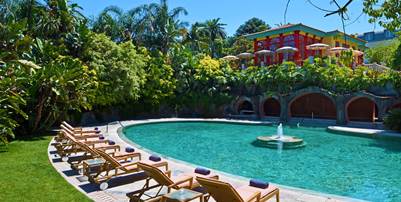
This is exemplified by the Group's high degree of know-how in key areas of operation within the tourism industry. It has achieved innovation in its procedures; having launched hotel time-share in Portugal 15 years ago, it is now the 3rd largest European group in this sector. It has demonstrated its ability to adapt through new initiatives, such as the Pestana Palace Hotel in Lisbon, which represents a successful departure from the Group's traditional base in leisure and resort hotels. It values and invests in human resources, and finally, the Group's focus on objectives and competitiveness means that every operation launched has been a success story.

Through its chain, Pestana Hotels & Resorts presently manages 38 hotels, spread over 3 continents: 23 properties in Portugal (9 in Madeira, 9 in the Algarve, 1 in Lisbon, 1 in Oporto, 1 in Cascais and 2 at Beloura/Sintra), 8 in Brazil (Rio de Janeiro, Angra dos Reis, São Paulo, Bahia, Natal, Curitiba, São Luis and shortly in Costa do Sauípe), 1 in Argentina (Buenos Aires), 3 in Mozambique (Maputo, Inhaca Island and Bazaruto Island), 1 in South Africa (at the Kruger Park), 1 in Cape Verde (Praia Town) and 1 in S.Tomé & Principe. On the 1st of September 2003 the Pestana Group also began managing Portugal's 40 pousadas (Pousadas de Portugal).

At present there are 6,000 people working within the Pestana Group. Although the decision centres are in Portugal, the Group benefits from the international experience of many of its senior employees who are able to contribute from different continents and thus ensure continued enhancement of the quality standard that the Group demands.

The strategy of the Pestana Group is based on three principles:

  1. Horizontal Integration - Having secured a solid base in the Autonomous Region of Madeira, its original market, the Pestana Group went for sustained growth in its core business (hotels). This growth took place both nationally, in the Algarve, Lisbon and Oporto, and internationally in countries having affinities with Portuguese culture, such as Mozambique and Brazil. Evidence of this growth is the recent purchase of two new properties in the Algarve, and entry into the market in the Cape Verde Islands through the acquisition of an already existing unit in the town of Praia. There is one project under construction, at Quinta da Beloura. All these are due to open in 2004. There are projects for Porto Santo, Angola and São Tomé e Príncipe currently at the feasibility study stage.

    Growth has been built on the basis of geographical areas that are defined within a concerted strategy aimed at achieving the necessary synergies and economies of scale. Amongst its commercial activities, in addition to traditional hostelry, the Pestana Group is the national leader, and one of the 5 largest companies in Europe, in the marketing of hotel operating under a property time-share regime.
  2. Vertical Integration - This has consisted of growth in the sub-sectors of the Group's tourism business, such as gaming, golf, holiday property, charter flight air transport, tourism operations in other countries (The United Kingdom, Spain and The United States) as well as in Portugal, and car hire. The logic of growth in this vector was to go for strong growth, creating sales and distribution channels in which the Group would dominate or have a significant influence in order to reduce dependence on the big tourism operation conglomerates. At the same time, the area of tourist activities would be developed allowing the Group to market a complete product thereby increasing the attractiveness of the hotels that are the Group's core business.
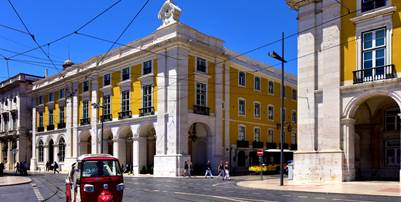
  3. The Group's business activities in the tourism and leisure industry are diverse and each is adapted to the area in which it is located. Growth takes place within a logical framework, seeking to secure the Group's presence by geographical areas and in a way that will achieve synergies and economies of scale, while at the same time seeking to disseminate the know-how gained in specific types of business into other areas through a policy of expansion. This, however, is not merely a matter of reproducing a pre-determined model; each business is adapted to the specific characteristics of the region. The Algarve is a region above all of resort hotels, golf and holiday properties; in Madeira, as well as resort hostelry, there has been focus on developing time-share property and the operation of a gambling concession; in Lisbon and Oporto the emphasis is on hostelry set within buildings of historical, cultural or architectural interest; in Brazil, there are resort hotels in the north east and at Angra dos Reis, while in São Paulo and Rio de Janeiro the focus is on 'corporate' hotel provision, with another such hotel due to open in Curitiba; finally in Mozambique and South Africa, the African hotel style is reproduced in the "Lodge" concept. All these areas are developed on the basis of a two-pronged strategy: 1 - operation and expansion of business in the tourism sector as a means of achieving long-term influence throughout the value chain within this sector, thus reducing dependence, and, 2 - the training of the Group's employees as the means of achieving and maintaining quality. In the last two years, the Pestana Group has had a training provision in excess of 230,000 hours, which makes it the largest company training-provider in the Portuguese tourism sector.

Developing this type of strategy in Portugal involves both a strong natural geographical base and the development of the Group's own internal resources. It is significant that the Pestana Group has been the pioneer of this strategy in the tourism sector in Portugal, and that this has clearly set the Group apart from its competitors.